


TL;DR
Starting your own private practice can feel scary, but knowing your numbers makes it very simple. Most therapists need about 3 to 5 regular client sessions each week to pay for a dedicated part-time therapy office space. If you want even lower financial stress, using flexible hourly room bookings allows you to grow your business at your own speed without high monthly bills.
The Simple Math Behind Paying for Your Private Practice Space
Many mental health professionals worry about opening their own office space. They wonder if their income will cover rent each month. The answer is much simpler than you think. You do not need a full caseload of 20 or 30 clients just to pay for your physical space.
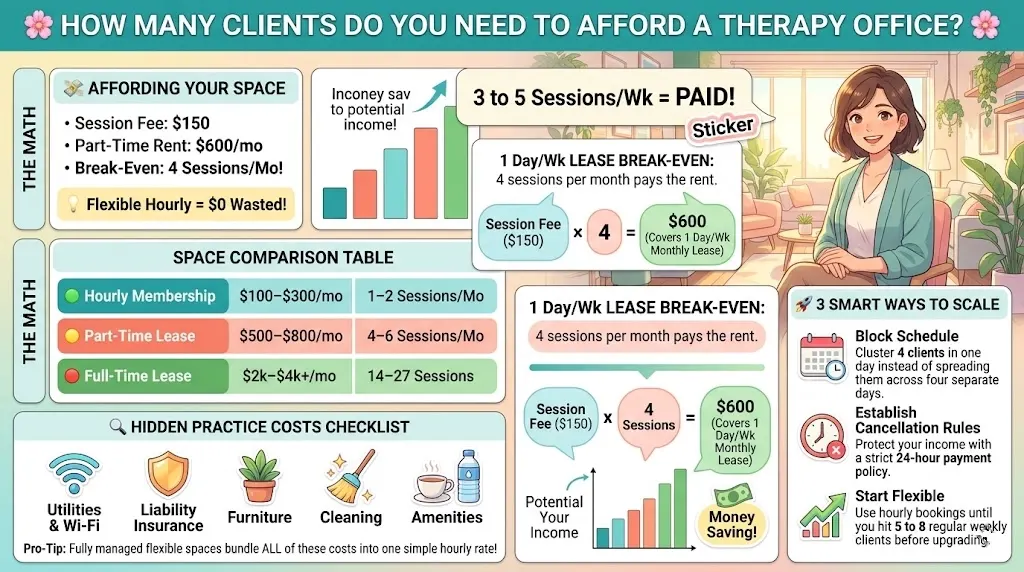
To figure out how many clients you need to afford a therapy office, you only need basic math. First, look at your full session rate. If your full fee is $150 per hour, just a few client meetings will cover your basic overhead costs easily.
For example, a traditional dedicated part-time lease usually gives you access to a room one full day every single week. If your monthly rent for that single day is $600, you only need 4 client sessions per month to break even. That is just one client session per week. Everything you earn after that first session goes straight into your pocket as clean profit.
If you choose a flexible setup like the TherapyHive Bumblebee Plan, your overhead is even lower. You only pay for the exact hours you use. This means you make a profit starting from your very first client session. You never have to worry about paying for empty hours when you are taking a personal vacation or handling last-minute client cancellations.
| Setup Type | Average Monthly Rent | Fee Per Client Session | Sessions Needed to Break Even | Main Benefit |
| Hourly Membership | $100 – $300 | $150 | 1 to 2 sessions | Zero wasted money on empty hours |
| Part-Time Lease (1 Day/Wk) | $500 – $800 | $150 | 4 to 6 sessions | Guaranteed same room every week |
| Full-Time Lease | $2,000 – $4,000+ | $150 | 14 to 27 sessions | Full control, but high fixed financial risk |
Fixed Leases vs. Flexible Hourly Office Spaces
Choosing how to rent your space is the biggest decision for your practice. Traditional long-term leases ask for long contracts and high security deposits. That commercial model creates heavy financial pressure, especially when clients cancel appointments unexpectedly or take long summer vacations.
A 2020 study published by the National Institutes of Health shows that structural workplace challenges and operational barriers directly impact provider well-being and service delivery. High fixed overhead costs add unnecessary anxiety to your daily clinical practice. You want to focus on helping people, not stressing over monthly rent bills.
When you choose flexible office sharing, you eliminate that worry completely. You get access to highly professional spaces without signing long commitments. You can start small with a TherapyHive Honeybee Plan to secure very low hourly rates. As your caseload grows, you can easily reserve more hours without any hassle.
Flexibility helps you keep your business healthy and safe. You never have to worry about paying for an empty room during slow months. You only pay for space when you are actually making money with clients.
Hidden Practice Costs to Think About Before Renting
Rent is not the only bill you pay when running a private practice. Many new business owners forget to add secondary operational expenses into their monthly practice budget. When these extra bills add up, your total overhead cost rises quickly.
Here are the main extra expenses to track carefully:
- Utilities and Wi-Fi: High-speed internet is mandatory for running electronic health records, online billing platforms, and secure video calls.
- Liability Insurance: You must protect your practice with reliable professional liability coverage and general facility insurance.
- Furnishings and Decor: Buying high-quality chairs, art, lamps, rugs, and soundproofing items costs a lot of money upfront.
- Cleaning Services: Keeping a professional therapeutic office clean requires regular professional maintenance and daily upkeep.
- Office Amenities: Fresh water, tea, tissues, and paper supplies are ongoing minor costs that you must replenish regularly.
When you rent a traditional commercial room, these costs land entirely on your shoulders. However, fully managed shared spaces bundle all these expenses into one easy rate. You can check out our fully furnished therapy offices to see how simple it is to step into a ready-to-use room. This setup lets you focus entirely on your clinical work while keeping your monthly bills low.
How to Scale Your Practice Caseload Without Financial Risk
Growing a business takes time and patience. Building a full, reliable client list usually takes a few months to a whole year. Trying to pay high commercial rent while building your business is very stressful and risky.
The best way to grow is by matching your expenses directly to your actual income. You can start by seeing private clients only one evening a week or on Saturdays. During this early growth period, keep your total practice overhead extremely low.
You can use our hourly therapy office rentals to book physical space only when clients confirm actual appointments. Once you hit 5 to 8 regular weekly clients, you can safely transition to a full-day option without any fear.
According to financial guidelines published by the U.S. Small Business Administration, keeping fixed costs low during early growth stages dramatically increases small business survival rates. Smart practice management means staying nimble until your client revenue is fully steady and reliable every month.
Smart Ways to Boost Your Session Profits
You do not always need more clients to increase your income. You can also optimize your practice model to make every hour more profitable.
First, consider offering specialized therapy services. Specialist clinicians can charge higher private pay rates. Second, reduce late cancellations by creating a clear 24-hour payment policy.
Third, make your scheduling efficient. Try to block your client sessions together on specific days. Seeing four clients back-to-back in one afternoon is much cheaper than spreading four clients across four different days.
You can learn more by reading about our therapist space sharing solutions. Grouping your sessions lowers your office costs and frees up your extra days for personal rest, marketing, or administrative tasks.
Frequently Asked Questions
What is the average cost of renting a therapy office?
Costs vary by location. In major cities, full-time leases cost between $2,000 and $4,000 per month. Part-time daily leases cost $500 to $800, while flexible hourly memberships usually cost $15 to $40 per hour.
Is it better to rent hourly or sign a full lease?
Renting hourly is best for new practices or part-time clinicians. It keeps costs low and prevents money loss. Signing a full lease makes sense only when you have a full caseload of 20+ clients.
How many clients per week is considered full-time?
Most clinical professionals consider 20 to 25 client sessions per week full-time. This leaves enough room for clinical note-writing, administrative tasks, billing, and continuing education without causing professional burnout.
Can I share an office space with another therapist?
Yes, sharing space is a very popular option. Therapists often split days or work out of flexible space hubs. This model significantly cuts costs for both clinicians while maintaining complete professional quality.
Should I take insurance or offer private pay only?
Private pay offers higher immediate revenue per session and simple billing. Insurance brings a steady supply of client referrals but comes with lower reimbursement rates and extra paperwork tasks.
What insurance do I need before seeing clients in an office?
You need general liability insurance and professional malpractice insurance. Most space providers require proof of coverage before allowing you to see clients in their physical rooms.
How do I handle client cancellations so I do not lose money?
Establish a strict 24-hour cancellation policy in your intake paperwork. Charge the full session fee for late cancellations to protect your working time and cover your hourly room costs.
What furnishings are required for a private therapy office?
You need comfortable seating for yourself and clients, soft lighting, a white noise machine for sound privacy, and a desk or small table for taking private clinical notes.
How much money should I save before starting a private practice?
It is smart to save 3 to 6 months of basic business expenses. This safety net covers minor unexpected costs while you slowly build your ongoing client list.
Key Takeaways
- You only need 3 to 5 client sessions per week to cover a standard part-time office space setup.
- Flexible hourly memberships protect your wallet when you are first starting out or growing your client list.
- Always calculate secondary overhead like internet, decor, and cleaning into your total monthly math.
- Grouping your sessions on specific days cuts down your costs and frees up your free time.
- Matching your office costs to your actual caseload keeps your practice safe and profitable.
Ready to Grow Your Practice Stress-Free?
Taking the next step in your professional journey should feel exciting, not overwhelming. At TherapyHive, we provide gorgeous, modern, fully furnished office spaces designed specifically for mental health practitioners. Whether you need an office for one hour a week or multiple full days, our flexible membership plans are built to help you thrive. Take full control of your private practice schedule, protect your profits, and give your clients the warm professional environment they deserve.