


TL;DR
Switching from a full-time agency job to your own therapy practice is completely doable when you do it step by step. You can start building a private practice while keeping your regular income to lower your financial stress. Flexible solutions like part-time office rentals make this career shift affordable and smooth for modern therapists.
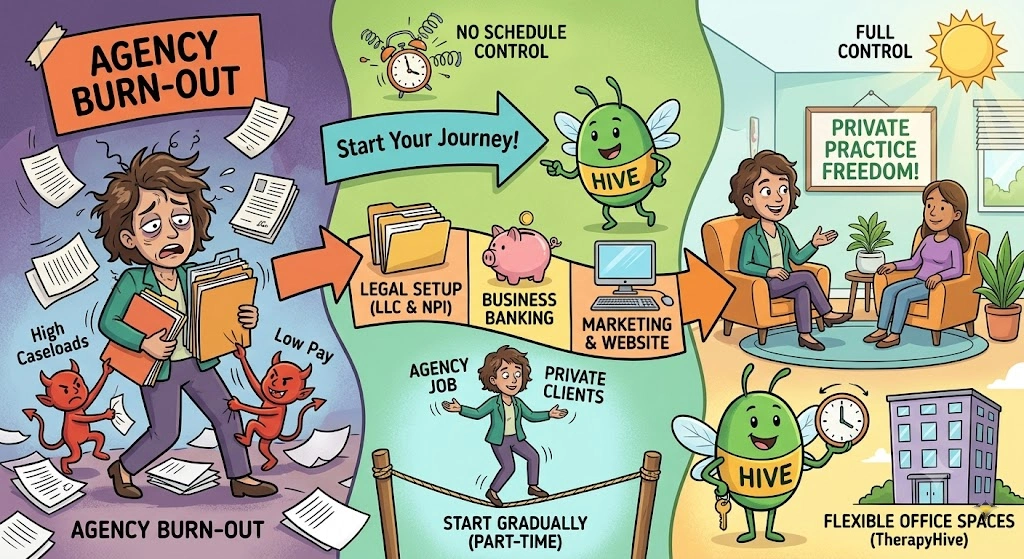
If you feel exhausted from high caseloads and low pay, learning how to transition from agency work to private practice is the best step toward professional freedom. Working in an agency provides steady pay, but it often leads to severe emotional fatigue and lack of schedule control.
1. Why Leaving Agency Work for Private Practice Is Worth It
Agency life is a wonderful place to build clinical skills, but it often pushes therapists to their limits. Long hours, endless paperwork, and strict productivity quotas leave very little time for self-care. When you work for yourself, you regain full control over your career, your income, and your daily schedule.
Restoring Your Work-Life Balance
In an agency, someone else decides how many clients you see each day. In private practice, you pick your own schedule and caseload limits. You decide whether to take on morning, evening, or weekend sessions based on your personal life.
Increasing Your Earning Potential
Agencies keep a large portion of the revenue generated by your clinical sessions. When you operate your own practice, you set your session fees and keep your earnings. This means you can work fewer hours while earning more income.
According to a comprehensive publication on the National Center for Biotechnology Information, health professionals who maintain greater workplace autonomy experience significantly lower rates of professional burnout and higher career satisfaction. Taking control of your environment directly protects your mental well-being.
2. Step-by-Step Plan to Build Your Private Practice
A successful transition relies on clear planning rather than sudden choices. You can complete these administrative steps while staying employed at your current agency job.
| Transition Step | Key Action Required | Estimated Timeline |
| Legal & Business Setup | Register your business entity and obtain an NPI number | Weeks 1–2 |
| Financial Preparation | Open a dedicated business bank account and set up liability insurance | Weeks 3–4 |
| Workspace Selection | Secure affordable, flexible office space or a virtual address | Weeks 5–6 |
| Marketing Setup | Launch a directory profile and establish a professional website | Weeks 7–8 |
1. Handle the Legal Details Early
Before accepting private clients, secure your professional credentials and legal paperwork:
- Obtain a National Provider Identifier (NPI) number.
- Select a business entity, such as an LLC or sole proprietorship.
- Purchase professional liability insurance for independent practice.
- Review your agency contract for any non-compete clauses.
2. Separate Your Finances
Keep your personal funds completely separate from your practice income. Open a dedicated business checking account to handle practice expenses. You can learn more about managing professional setups through our specialized Therapy Office Rental NYC service options.
3. Managing Your Finances During the Career Switch
Financial stress is the biggest reason therapists hesitate to leave agency jobs. The safest approach is building your practice slowly while keeping your main income source.
4. Start Part-Time Before Going Full-Time
Do not quit your agency job right away. Instead, see a few private clients during evenings or weekends. Once your private income consistently covers your basic personal expenses, you can safely reduce your agency hours or resign entirely.
5. Keep Your Monthly Overhead Low
Traditional full-time office leases require expensive multi-year contracts, upfront deposits, and furniture costs. Paying high rent before building a full client roster creates unnecessary financial strain.
Instead of committing to a costly long-term lease, explore modern shared options like Part Time Therapy Office Rental NYC. Paying only for the hours or days you actually use keeps your overhead extremely low while your business grows.
4. Finding Flexible Office Space for Your Growing Practice
Your clinical workspace needs to look professional, feel welcoming, and protect client privacy. Having a physical location also builds strong credibility with potential clients in your area.
The Power of Hourly and Daily Rentals
Modern therapists no longer need expensive full-time spaces to see clients in person. Flexible workspace arrangements allow you to rent high-end offices by the hour, half-day, or full day.
If you are expanding your availability in competitive locations, utilizing an Hourly Therapy Office Rental NYC allows you to scale up room usage only as client bookings increase.
Creating a Welcoming Environment for Clients
Clients expect a clean, comfortable, and quiet setting when attending therapy sessions. Premium shared medical and therapy spaces offer fully furnished rooms, quiet waiting areas, secure Wi-Fi, and keyless entry systems.
If you are looking for prime, easily accessible locations for your practice, review our Therapy Office Manhattan options to find spaces that fit your exact schedule.
5. Attracting Private Pay Clients and Building Your Brand
Once your infrastructure and office space are set up, you need a steady stream of incoming clients. Marketing your practice effectively ensures long-term business stability.
Build an Authentic Online Presence
Create a clean, easy-to-read website that explains who you are, what challenges you address, and how you help people. Write clear content that speaks directly to your ideal client’s daily struggles.
To reach local clients who prefer convenient, high-profile locations, check out our tailored Therapy Office Midtown NYC solutions to establish your presence in prime business districts.
Network with Local Professionals
Reach out to local psychiatrists, medical doctors, nutritionists, and fellow therapists. Let them know your practice areas and availability. Personal networking remains one of the most reliable ways to get consistent client referrals.
Federal reports published on the official Bureau of Labor Statistics website highlight steady, growing market demand for qualified mental health professionals. Building a distinct local brand helps you meet this demand independently.
Conclusion
Learning how to transition from agency work to private practice does not require taking a risky leap into the unknown. By transitioning gradually, keeping your overhead low, and using flexible office rentals, you can step away from agency burnout safely. You gain full ownership of your time, your income, and your career path. Take the first small step today, establish your legal base, and build the rewarding practice you truly deserve.
Frequently Asked Questions
How long does it take to switch to private practice?
Most therapists complete the full transition within three to six months. This timeframe gives you enough time to obtain credentials, secure insurance, rent flexible space, and build an initial caseload safely.
Can I keep my agency job while starting private practice?
Yes, most therapists start part-time while keeping agency employment. Always check your employment agreement first to avoid any potential non-compete conflicts or ethical issues regarding client scheduling and referrals.
Do I need a full-time office to start private practice?
No, you do not need a full-time space. Starting with an hourly or daily flexible office rental keeps your monthly expenses low while you steadily build up your private client list.
How do I set my private practice session rates?
Research average self-pay rates in your local area for your specialty. Calculate your monthly overhead costs, business taxes, and desired personal income to establish a fair, profitable rate.
Is starting a private practice financially risky?
Starting a practice carries very low risk if you transition gradually. By keeping your agency job and choosing flexible office spaces, your expenses stay low while your client roster grows steadily.
What legal business structure should I pick for my practice?
Many therapists choose a Limited Liability Company or single-member LLC for personal asset protection. Consult with a qualified local business accountant or legal advisor to pick the best option.
How many private clients do I need before quitting my job?
Most therapists wait until they see ten to fifteen regular private clients weekly. This consistent income usually provides enough financial confidence to reduce agency hours or resign safely.
How do I get my very first private practice clients?
Create profiles on major therapist directories, build a modern website, and contact local healthcare providers. Professional networking and word-of-mouth referrals are highly effective for filling your open session slots.
What is the cheapest way to rent a therapy office space?
Renting shared, fully furnished therapy suites by the hour or day is the most affordable choice. You only pay for the time you use, eliminating expensive long-term leases.
Key Takeaways
- Transition slowly by starting part-time while keeping your agency income intact.
- Lower your initial financial risk by renting flexible, hourly office spaces.
- Complete key legal tasks like getting your NPI number and liability insurance early.
- Set session rates based on local market standards and your personal financial needs.
- Grow your client base using simple online profiles and strong professional networks.
Ready to Step Into Professional Freedom?
Ready to take control of your therapy career without the stress of expensive long-term office leases? At TherapyHive, we offer flexible, fully furnished, and modern therapy spaces designed to help your practice thrive. Whether you need a room for a few hours a week or full days, we provide turnkey solutions tailored to your schedule. Visit Therapy Hive today to tour our spaces and start your journey toward private practice freedom!