


TL;DR
Starting a private therapy practice can feel scary when your calendar is empty. You can attract your initial caseload by networking with local professionals, optimizing online therapy directories, and selecting a clear clinical niche. Creating a warm professional therapy space and connecting with peer support networks helps you grow with confidence.
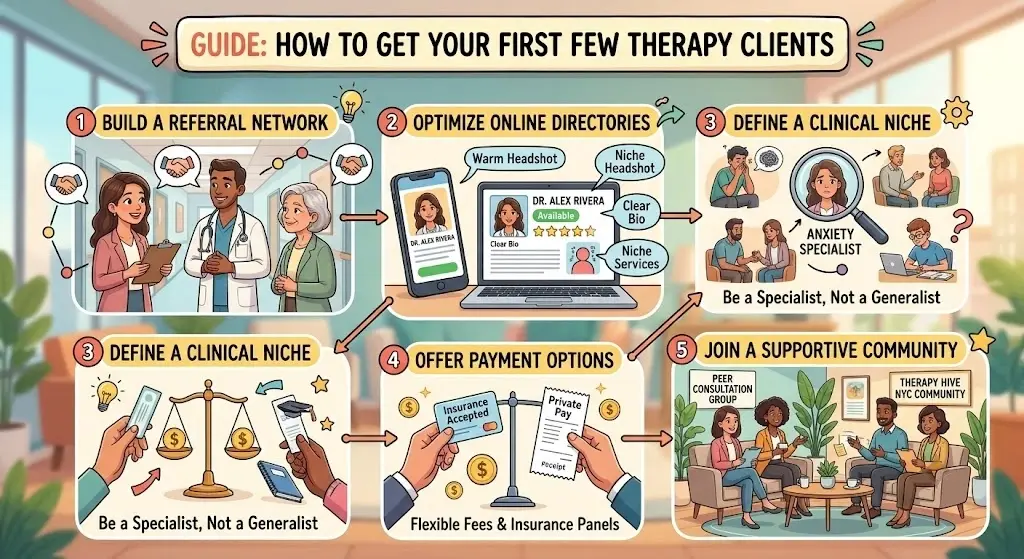
How Therapists Fill Their Early Caseload
Starting your own mental health practice is an exciting goal. However, many new clinicians ask the same question: how do therapists get their first few clients when nobody knows their name yet?
The direct answer is that early success relies on five core steps. First, you build a strong referral network with local doctors and senior therapists. Second, you set up complete profiles on popular therapist directory platforms. Third, you pick a specific clinical niche so the right people find you fast. Fourth, you join relevant insurance panels or offer clear private pay rates. Fifth, you work from a trusted professional clinical environment that builds instant credibility.
Building a full practice takes consistent daily action. According to healthcare workforce data from the U.S. Department of Health and Human Services, demand for qualified mental health professionals continues to grow steadily across the country. By combining smart digital marketing for therapists with genuine local outreach, you will fill your caseload sooner than you think.
1. How to Build a Therapist Referral Network
Word of mouth remains the most reliable way to attract new patients. Many new practitioners assume that online ads are mandatory. In reality, personal relationships with other health providers bring in high-quality referrals much faster.
Connect with Senior Clinicians
Reach out to established mental health practitioners in your city. Senior practitioners often have full caseloads and waiting lists. When a prospective patient calls them, they need trusted colleagues to send those people to. Send a polite introduction email or invite them for coffee. Explain your clinical focus and let them know you are currently accepting new bookings.
Partner with Medical Doctors and Community Leaders
Primary care physicians, pediatricians, wellness coaches, and local school counselors interact with people seeking care every single day.
- Visit local health clinics and introduce your practice.
- Leave professional business cards and print brochures.
- Send follow-up thank-you notes after every professional meeting.
- Attend local healthcare networking events regularly.
When medical professionals know your name and trust your clinical skills, they will feel confident sending their patients to your office.
2. How to Attract Therapy Clients Through Online Marketing
Modern clients search for care online before making a phone call. If you do not have a clear web presence, potential clients might choose another clinician.
Optimize Your Directory Profiles
Online directory pages act as your digital storefront. Fill out every section of your profile on popular mental health directories. Use a professional headshot where you look warm and approachable. Write your bio using friendly, plain language instead of dense clinical jargon. Focus on how you can help the client solve their specific problems.
Create an Informative Practice Website
Your personal practice website gives potential clients a complete picture of your practice philosophy. Make sure your site loads quickly and works well on mobile phones. Detail your background, logistics, location, and fees clearly. You can learn more about Therapy Hive NYC to see how professional community support helps clinicians establish their presence in competitive markets like New York.
A strong website builds immediate trust with visitors. A study published by the National Institutes of Health highlights that clear digital health communications significantly improve patient engagement and trust.
3. Define a Clear Clinical Niche to Stand Out in Your Area
Trying to treat everyone can make your marketing feel vague. When you focus on a specific problem, clients seeking that exact help will choose you immediately.
Why Choosing a Niche Accelerates Growth
Clients want a specialist who understands their exact struggle. Whether you focus on anxiety, relationship issues, life transitions, or young adults, a defined focus makes your messaging memorable.
Here is how general practice approaches compare to niche practice strategies for new clinicians:
| Strategy Aspect | General Practice Approach | Targeted Niche Approach |
| Target Audience | Anyone needing support | Specific populations with defined needs |
| Marketing Message | Broad counseling services | Focused solutions for specific issues |
| Referral Source | General medical clinics | Specialized doctors and support groups |
| Client Decision Speed | Slower due to many choices | Faster because you fit their exact need |
| Market Competition | High competition with all peers | Low competition in specialized areas |
Align Your Services with Client Needs
Once you select your area of focus, adjust your messaging across all platforms. Explain the exact benefits of your treatment approach. Potential clients will feel seen and understood when they read your content. To explore different practice support setups, check out our flexible therapy space services designed to accommodate growing private practice needs.
4. Utilize Directories and Insurance Options Strategically
Deciding how clients pay for your care plays a major role in how fast your calendar fills up. You must weigh the pros and cons of taking insurance versus running a self-pay model.
Joining Insurance Panels for Fast Volume
Accepting health insurance is one of the fastest ways to get client referrals. Insurance companies list in-network providers in their searchable databases. Millions of policyholders search these databases daily to find affordable care. While credentialing takes time and paperwork, it guarantees a steady stream of inquiries.
Building a Private Pay Practice
If you prefer a cash pay practice, you need proactive outreach tactics:
- Offer sliding scale fees for a limited number of client slots.
- Provide superbills so clients can claim out-of-network insurance reimbursements.
- Highlight specialized therapeutic techniques that justify out-of-pocket costs.
- Maintain transparent pricing on your website so there are no surprises.
Combining clear payment policies with a welcoming attitude encourages prospective clients to schedule that initial consultation.
5. Secure a Professional Workplace and Peer Community
Your physical environment and support system impact your confidence as a new business owner. Working in isolation can lead to burnout, while a supportive environment fosters professional growth.
The Importance of a Professional Practice Space
Where you meet clients shapes their very first impression of your practice. A quiet, beautifully decorated room creates a calm atmosphere that promotes healing. Flexible workspace arrangements allow you to rent professional rooms without heavy long-term financial commitments. You can explore high-quality therapy office rentals that provide full amenities for modern clinicians.
Tap into a Supportive Clinician Network
Never build your practice completely alone. Joining local peer consultation groups gives you space to discuss clinical questions, share business ideas, and swap client referrals. Joining a dedicated therapist community network connects you with peers who understand your journey and actively help you grow your business. When you are ready to take the next step in establishing your practice, feel free to contact Therapy Hive NYC to discover our supportive community resources.
Summary of Practice Growth Essentials
Attracting your first clients requires a blended approach of outreach, clear branding, and strategic networking.
Strategic Checklist for New Clinicians
- Networking: Connect with local doctors, school counselors, and senior therapists weekly.
- Digital Branding: Complete your online directory profiles with clear, empathetic descriptions.
- Specialization: Define your clinical niche to attract clients looking for specific help.
- Environment: Choose a flexible, professional office setup that instills client confidence.
- Peer Support: Join professional associations and consultation groups for ongoing referrals.
Frequently Asked Questions
How long does it usually take to get your first therapy client?
Most new mental health professionals land their first client within two to six weeks. This timeline depends on your active networking efforts, directory profile completion, and local community outreach strategies.
Is Psychology Today necessary for finding initial clients?
Psychology Today is one of the most visited clinician directories available. Having a complete profile there significantly increases your online visibility and helps prospective local clients discover your private practice quickly.
How many client inquiries should I expect each week?
When starting, expect one to three inquiries weekly. As your local referral network expands and your web search visibility improves, your weekly inquiry volume will naturally grow over time.
Should I accept insurance when first starting my practice?
Accepting insurance helps fill your schedule quickly because insurance directories drive high traffic. However, cash pay practices offer higher rates per session and eliminate complicated insurance billing paperwork for clinicians.
What is the best way to ask colleagues for client referrals?
Send a concise, friendly email introducing yourself and your clinical background. Express your availability for new bookings, state your clinical niche clearly, and offer to support their overflowing waitlists anytime.
How many clients do I need to run a full-time private practice?
A full-time private practice usually ranges between fifteen and twenty-five client sessions per week. This number depends on your financial goals, session pricing, and desired personal work balance.
Can social media marketing help me attract local therapy clients?
Yes, educational social media content builds trust and authority. Sharing quick mental health tips, stress management strategies, and practice updates helps local community members find and connect with your services.
What is a clinical niche and why do I need one?
A clinical niche is a focused therapeutic specialty, such as treating panic disorders. Specializing makes your marketing stand out and helps clients with those exact needs choose you over general providers.
How does a professional office space help attract new clients?
A clean, quiet, and well-decorated office creates an immediate impression of trust and professionalism. Clients feel safe, comfortable, and valued when receiving care in a modern clinical setting.
Essential Takeaways for Early Practice Success
- Relationship Building First: Personal connections with local healthcare providers generate the highest quality client referrals.
- Optimize Digital Presence: Complete online profiles and clear websites convert browsing visitors into scheduled appointments.
- Specialize Your Care: A defined clinical focus makes your marketing stand out in competitive urban areas.
- Professional Workspace: Renting welcoming, fully equipped office space builds instant trust with visiting clients.
- Engage with Peers: Surrounding yourself with supportive clinician networks keeps your practice growing steadily over time.
Build Your Thriving Practice with Therapy Hive NYC Today
Building a successful independent practice does not have to feel overwhelming or isolating. Having access to flexible office spaces, modern clinical amenities, and an encouraging peer network gives you the strong foundation you need. At Therapy Hive NYC, we provide premium therapy spaces and a collaborative professional community tailored for modern mental health clinicians. Take the next confident step in your professional journey and join a vibrant community where your private practice can truly flourish.