


TL;DR: Starting a therapy business can feel scary and hard. Many mental health workers make simple mistakes with money, caseloads, and daily schedules. This guide shows you how to spot these problems early, protect your clients, and build a strong business with Therapy Hive NYC.
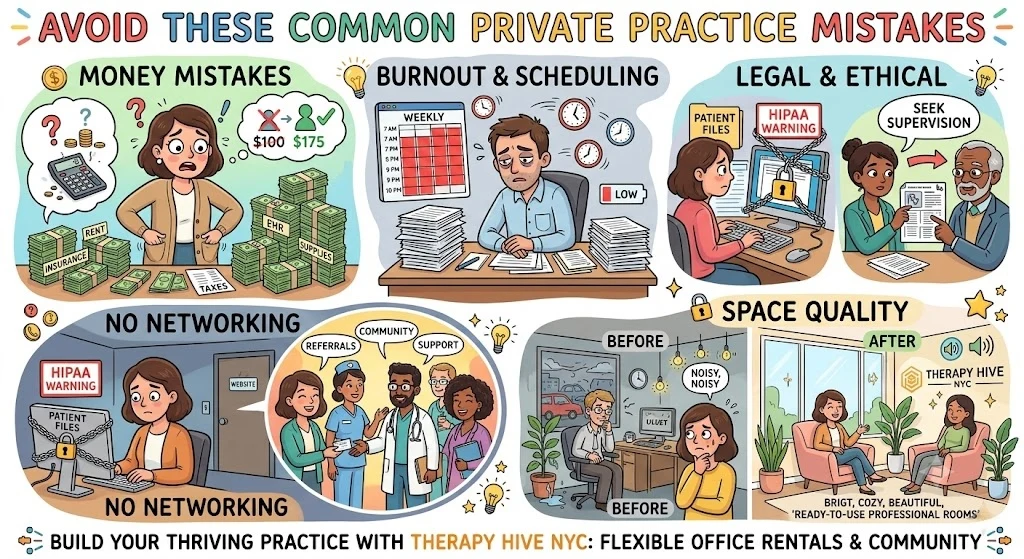
If you are opening a mental health clinic, learning common private practice mistakes will save you time and money. Starting out as an independent therapist brings exciting freedom. However, running a business requires skills that graduate schools rarely teach. Many great counselors struggle because they misjudge daily operational costs, set low fee structures, or try to handle every complex client case alone. When you fix these issues early, you protect your legal standing and give your clients better care. Therapy Hive NYC provides the ideal space and shared tools so you can focus fully on helping people.
1. Mismanaging Money and Underestimating Hidden Setup Costs
The biggest trap for new clinic owners is not tracking overhead costs. When you calculate your monthly budget, you must think about more than just rent. You need to pay for safe internet, billing platforms, malpractice insurance, and office supplies.
If you set your session fees too low, you will feel tired and burnt out fast. You should set rates that cover your taxes, health plans, and business growth. Working from professional office spaces helps lower your upfront costs while keeping your work professional.
Many therapists forget to plan for slow months. Client numbers can drop during summer breaks and winter holidays. You must build a savings safety net, so your business stays strong all year long.
To avoid huge upfront overhead costs, you can read more about our Hourly Office Rentals to keep your monthly bills predictable and flexible.
| Business Expenses | Independent Setup | Shared Space Model |
| Lease Terms | Long multi-year contracts | Flexible hourly or daily access |
| Utility Bills | Paid by owner separately | Included in one simple price |
| Furniture Setup | High upfront buying costs | Ready-to-use professional rooms |
| Front Desk Service | Hired staff overhead | Shared community resources |
2. Setting Risky Schedules and Burning Out
It is easy to say yes to every single client inquiry when you first launch. However, taking on too many clients leads to deep mental fatigue. An exhausted counselor cannot give high-quality care.
You need to set hard limits for your schedule. Decide how many hours you can talk with clients each day. Leave breaks for writing case notes, returning phone calls, and eating healthy meals. Flexibility is great, but a messy schedule creates high stress.
To help maintain a sustainable routine, check out our Daily Office Rentals for dedicated spaces that fit your exact schedule.
Here are the updated sections with specific, direct deep-links to authentic research, official government studies, and regulatory guidance documents instead of homepages:
It is also vital to keep your clinical standards high through continuous training. The federal research published in the NCBI Bookshelf Database demonstrates that structured clinical supervision directly enhances patient outcomes, strengthens provider skills, and prevents burnout among mental health practitioners.
When you manage your workload, you serve your community far better. Having dedicated work times also protects your personal family life.
3. Ignoring Legal Guidelines and Poor Clinical Supervision
Clinical mistakes often happen when therapists feel isolated. Trying to manage hard cases without expert advice can cause legal and ethical risks. You must know your personal skill limits.
If a client needs specialized care that you cannot provide, you must refer them to another qualified professional. Referring clients out is not a failure. It is an ethical rule that keeps clients safe. It also helps you build trusted relationships with local doctors and counselors.
Keeping client records secure is another vital task. Storing health data incorrectly can lead to severe government penalties. The official regulatory summary on the HHS HIPAA Privacy Rule details how mental health providers must safeguard client records and protected health information under federal law.
If you are expanding your team or seeking peer support, explore our Full-Time Office Rentals designed for growing mental health teams.
4. Failing to Network and Build Referral Links
Many practitioners build a website and wait silently for clients to call. This strategy rarely works well. You must talk with local healthcare workers, psychiatric nurses, and local wellness groups.
Networking is a simple way to create continuous incoming client inquiries. When you meet colleagues, share your focus areas clearly. Let them know what client issues you treat best.
Joining shared community spaces makes networking easy and natural. You can talk with peer clinicians in lunch areas or group lobbies. Sharing ideas keeps your practice fresh and brings in steady work.
To build strong connections with nearby clinicians, consider joining our NYC Therapist Community to connect with local leaders.
5. Overlooking Space Quality and Patient Comfort
Your workspace impacts how clients view your professional care. A noisy, messy, or dark room makes clients feel anxious. You need a peaceful environment with soft chairs, gentle lights, and good soundproofing.
Buying expensive furniture and long leases can drain your savings fast. Renting a ready-made suite gives you a clean, upscale look without large debts.
Your physical room tells clients that you value their safety and comfort. It gives your practice an established, trustworthy brand image right away.
For clinicians needing maximum work options, look into our flexible Part-Time Office Rentals to match your work habits.
Frequently Asked Questions
What is the biggest money mistake in private practice?
Underestimating monthly operational expenses is the top mistake. Providers often forget software costs, taxes, and empty schedule slots during holiday seasons. Always track every dollar and build an emergency cash fund.
How do I set correct fees for therapy sessions?
Research your local city market carefully before picking rates. Calculate all your monthly operating bills, insurance costs, and desired personal pay. Set fees that reflect your clinical experience fairly.
Is it safe to treat every client issue?
No, it is dangerous and unethical to work outside your expertise area. Always refer complex client cases to specialists when needed. This practice keeps clients safe and protects your professional license.
Why is clinical supervision important for independent therapists?
Peer supervision prevents professional isolation and clinical errors. Discussing tough cases with skilled colleagues improves treatment plans. It also protects your mental energy and helps you stay updated on healthcare rules.
How many clients should a full-time therapist see weekly?
Most full-time clinicians see between fifteen and twenty-two clients per week. Seeing more can cause serious mental fatigue. Leave enough open hours for administrative work, notes, and resting.
How can shared spaces lower my business risk?
Shared suites eliminate long lease contracts and costly office buying bills. You pay only for the time you use. This model keeps your overhead low while offering clients an elegant room.
What administrative mistakes hurt growing therapy practices most?
Failing to set clear payment and cancellation rules causes major revenue loss. Always collect payment agreements before the first meeting. Use secure billing platforms to keep your financial records organized.
How does peer networking generate client referrals?
Connecting with local healthcare providers builds long-term professional trust. When colleagues know your clinical specialty, they refer clients who need your specific skills. It creates a steady referral loop.
When should an independent therapist hire business help?
Hire professional help when administrative tasks take time away from client sessions. Virtual assistants, accountants, and shared office services free up your day so you can focus on clinical care.
What are the most common mistakes therapists make when starting a private practice?
Common private practice mistakes include underestimating startup costs, setting unrealistic schedules, overlooking licensing requirements, and failing to build referral relationships. Therapists may also commit to expensive office leases before establishing a consistent client schedule. A business plan, clear policies, and flexible workspace arrangements can reduce these risks.
How much money should therapists save before starting a private practice?
Therapists should estimate their business startup costs, monthly operating expenses, personal living expenses, and expected income before opening a practice. The amount they need to save depends on rent, software, insurance, licensing fees, marketing expenses, and anticipated client volume. A financial reserve can cover essential costs while the practice builds a steady caseload.
How can therapists avoid burnout when running a private practice?
Therapists can reduce burnout risks by setting realistic appointment schedules, reserving time for documentation, and establishing boundaries around availability. Regular peer consultation, appropriate clinical support, manageable administrative systems, and planned time off can also support sustainable practice management.
Key Takeaways
- Track every business expense carefully and avoid signing expensive long-term lease contracts early on.
- Maintain clear ethical limits by referring complex cases outside your clinical expertise to qualified colleagues.
- Use shared office rentals to enjoy high-end professional spaces without paying massive upfront costs.
- Build strong professional networks with local doctors to keep client referrals flowing into your practice.
- Protect your energy by limiting weekly client hours and setting clear administrative break times.
Upgrade Your Mental Health Practice Today
Ready to launch or expand your business without high stress and overhead? Therapy Hive NYC offers flexible, beautifully designed office spaces built exclusively for mental health professionals. Join our supportive community, streamline your daily operations, and elevate your practice standards. Contact our friendly team today to schedule your private tour!