


TL;DR
Deciding whether to take insurance is one of the biggest choices for private practice owners. Insurance panels bring a steady flow of client referrals, but payout rates are often 50% to 70% lower than private pay fees. Weighing your weekly schedule, income needs, and niche specialization will help you pick the right model for your business.
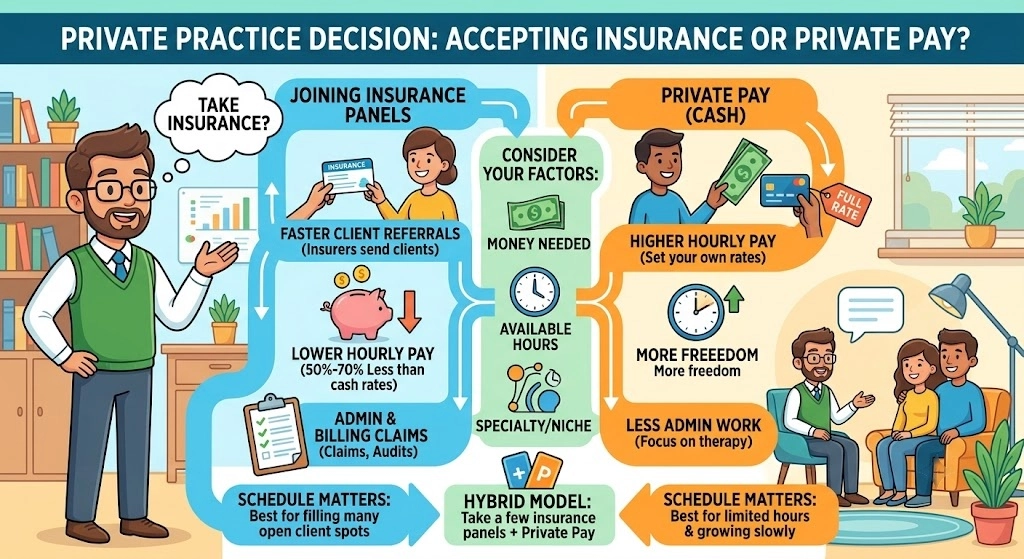
Should You Take Insurance for Your Practice?
Deciding on accepting insurance in private practice is not a simple yes or no decision. Every therapist faces a unique set of financial goals, scheduling limits, and personal career priorities. Generally speaking, reimbursement rates from health insurance panels can be 50% to 70% lower than standard cash rates. However, joining these panels instantly connects you with hundreds of potential clients who need affordable mental health support.
To make the right choice, you must calculate your baseline monthly expenses and know how many client hours you can offer each week. If you have limited open hours and can afford to grow your caseload gradually, a private pay approach might serve you best. On the other hand, if your calendar has many open slots and you want full sessions quickly, insurance panels offer a reliable shortcut. You can also explore customized support through professional Services designed to help therapists scale efficiently.
The Real Financial Impact of Joining Insurance Panels
Reimbursement rates vary significantly by provider and geographic region. When you sign a contract with a health insurance company, you agree to accept a pre-negotiated fee per session. In high-cost cities like New York, full out-of-pocket rates can range from $150 to $250 per hour. Insurance payouts for the exact same clinical service often range between $70 and $120.
| Practice Model | Average Fee / Hour | Client Volume Speed |
| Full Cash Pay | $150 to $250+ | Slow to Moderate |
| In-Network Insurance | $70 to $120 | Fast to Immediate |
| Hybrid Model (Mixed) | $100 to $185 | Balanced |
Beyond the flat hourly rate, you must consider administrative overhead. Billing claims, tracking unpaid copays, and submitting clawback documentation require significant time. Therapists who manage their own billing lose several hours each week to administrative chores. These unpaid hours lower your actual hourly wage even further.
Researchers examining healthcare payment systems in the NCBI Mental Health Burnout Study have highlighted how heavy insurance administrative burdens directly contribute to provider burnout and long-term practice instability. Understanding these hidden operational costs is essential before committing to contractual rates.
Comparing Insurance Panels vs Cash Pay Models
Choosing between insurance and cash pay shapes how your entire business operates. Below is a direct side-by-side breakdown of how both models affect your revenue, administrative work, and client onboarding.
| Operational Factor | Insurance Panel Model | Private Cash Pay Model |
| Average Hourly Pay | 50% to 70% lower than market rates | Full market rate set by therapist |
| Caseload Growth Speed | Fast referrals through insurer directories | Slower initial growth needing active marketing |
| Billing Admin Time | High (claims, pre-authorizations, audits) | Low (direct payment at time of service) |
| Client Accessibility | High affordability for insured patients | Limited to clients with disposable income |
| Clinical Autonomy | Insurer sets session limits and diagnosis rules | Total freedom over treatment plans and length |
While private pay offers higher income per hour, building a full client roster takes consistent marketing and networking efforts. Many clinicians start out using flexible workspace solutions like a professional Virtual Office Space to keep operational costs extremely low while testing out direct fee structures.
How Practical Needs and Schedule Limits Direct Your Choice
Your personal schedule is one of the most important factors in this decision. If you balance private practice work with a full-time agency job or family care, your weekly availability might be limited to 5 or 10 hours. In that scenario, taking lower insurance rates makes little sense because your limited hours must yield maximum income.
Conversely, if you are transitioning full-time into private practice and have 25 or 30 open client slots, filling those spots quickly is critical to pay your bills. Taking insurance acts as a natural marketing engine. Insurance directories list your name, specialty, and contact information, bringing a steady stream of incoming phone calls without paid advertising.
Working alongside peers in a collaborative Community gives clinicians a space to share real-world experiences about panel credentialing, payment turnaround times, and fee negotiation strategies.
Building a Standout Niche Without Insurance Dependencies
Therapists who choose not to accept insurance usually succeed by developing a specialized niche. When you specialize in a specific mental health area, clients actively search for your unique expertise regardless of coverage status.
Popular specialized areas include:
- Treatment for rare anxiety disorders or OCD using specialized protocols
- Couples counseling and specialized relationship therapy
- Trauma recovery using specialized EMDR or somatic techniques
- Culturally sensitive therapy for specific community groups
Specialization creates high demand. When potential clients see that you possess advanced training in their exact problem, out-of-pocket costs become less of an obstacle. You can also host group sessions or workshops in a dedicated Office Space to increase revenue while providing affordable access to care.
Researchers examining healthcare payment systems in the NCBI Mental Health Burnout Study have highlighted how heavy insurance administrative burdens directly contribute to provider burnout and long-term practice instability. Understanding these hidden operational costs is essential before committing to contractual rates.
Essential Steps Before Signing Your First Insurance Contract
If you decide that joining insurance panels aligns with your financial strategy, do not sign contracts blindly. Credentialing takes anywhere from 30 to 120 days, and every contract contains strict legal obligations.
Be sure to follow these protective steps:
- Review reimbursement schedules carefully: Verify exact CPT code payout amounts for your specific license type in your geographic region.
- Examine contract termination clauses: Understand the exact notice period required if you choose to leave the panel in the future.
- Check client continuity requirements: Know how panel exit rules impact ongoing client care to prevent unexpected abandonment issues.
- Evaluate audit policies: Ensure you fully understand documentation standards required during routine payer audits.
Learning more about professional practice management options allows clinicians to establish strong operational foundations right from day one.
Making the Smart Choice for Your Private Practice Journey
Deciding whether to take insurance comes down to balancing your immediate cash flow needs against long-term business independence. Neither path is inherently superior. Accepting insurance provides fast client volume at lower hourly rates, while cash pay yields higher rates per hour at the cost of slower initial growth.
Many successful clinicians utilize a hybrid approach. They join one or two high-paying panels while building their reputation, then gradually transition to a full private pay model as their client waiting list expands.
By analyzing your financial baseline, setting realistic schedule limits, and staying clear on your clinical goals, you can build a stable, rewarding practice that serves both your clients and your career.
Frequently Asked Questions
How much less do insurance panels pay compared to private cash pay rates?
Insurance panels typically reimburse clinicians 50% to 70% less than standard private pay fees. Payout rates depend heavily on your license type, geographic location, and specific contract terms with each insurance provider.
How long does the insurance credentialing process usually take for private practitioners?
Credentialing generally takes between 30 and 120 days. Delays often occur due to incomplete applications, verification checks, or backlogs within the insurance panel credentialing departments.
Can I choose to join only one or two insurance panels?
Yes. You are free to select specific insurance panels based on their local payout rates and contract terms. You do not need to accept every insurance company in your region.
What is the primary benefit of staying a private pay therapy practice?
Private pay offers higher earnings per session, complete clinical freedom, zero insurance billing paperwork, and complete privacy for client records without requiring formal mental health diagnosis submissions.
How does having a clinical specialty help therapists avoid taking insurance?
Specializing in a specific disorder or population makes your services unique. Clients seeking advanced expertise are often willing to pay cash out of pocket when specialized care is required.
What happens to my current clients if I decide to leave an insurance panel later?
You must provide written notice based on your contract terms. Clients may choose to pay cash out of pocket, use out-of-network benefits, or transfer to another covered provider.
Are there hidden administrative costs associated with taking health insurance?
Yes. Managing billing claims, following up on unpaid copays, handling pre-authorizations, and dealing with potential audit paperwork require several unpaid hours of administrative labor each week.
Can I run a hybrid practice that accepts both insurance and cash pay?
Yes. Many clinicians maintain a hybrid model by reserving a specific number of weekly slots for insurance clients while keeping remaining session slots open strictly for full fee cash clients.
Where can I get direct support to set up my clinical practice structure?
You can easily reach out through our official Contact portal to discover tailored workspace, networking, and administrative solutions designed specifically for growing private practice practitioners.
Key Takeaways
- Insurance panels increase client volume quickly but reimburse 50% to 70% lower than standard cash rates.
- Your weekly schedule dictates your strategy: limited client hours favor private pay, while full open calendars benefit from insurance referrals.
- Specialization builds cash pay demand: offering niche clinical expertise encourages clients to pay out of pocket.
- Review panel contracts thoroughly: always inspect exit clauses, billing rules, and client continuity policies before signing.
- Hybrid models offer flexibility: combining cash pay with select insurance panels provides steady income and steady client growth.
Take the Next Step Toward Practice Growth
Building a thriving private practice requires clear financial planning, modern professional spaces, and a supportive network of colleagues. Whether you decide to accept insurance or remain private pay, having the right environment makes all the difference for long-term success.
Discover how flexible office solutions and community resources can elevate your clinical career. Reach out today to explore custom workspace options tailored to your practice needs!