
TL;DR
Renting a workspace for your practice is a huge step. Small oversights in soundproofing, lease terms, and location can cost thousands of dollars and hurt your client retention. Learning the top 10 mistakes to avoid when renting a therapy office helps you protect your revenue, safeguard client privacy, and build a stress-free environment.
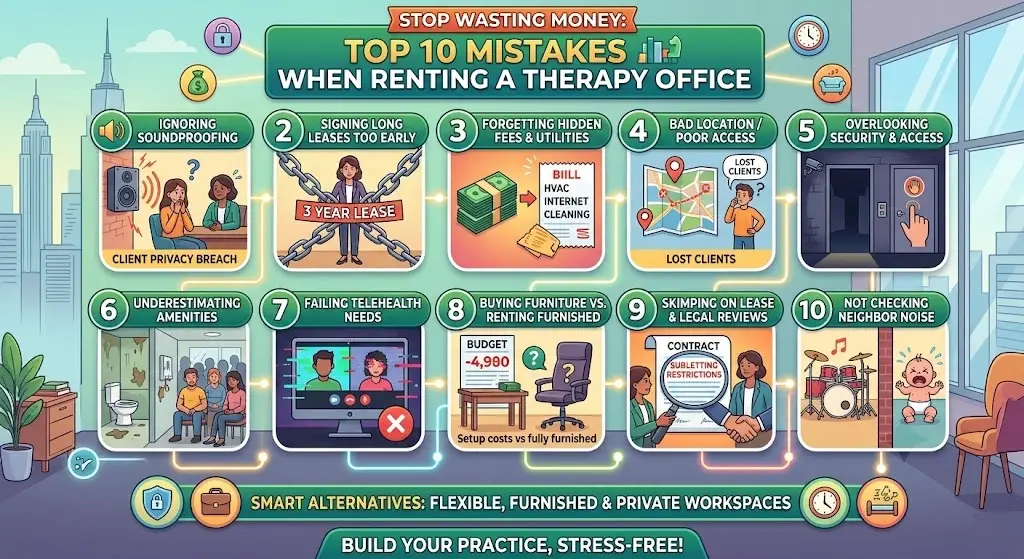
Renting a professional room for your practice is an exciting milestone. However, simple leasing oversights can quickly drain your budget and disrupt your clinical work. Avoiding the top 10 mistakes when renting a therapy office ensures you find a safe, compliant, and cost-effective space. Many clinicians rush into long commitments without checking essential details like privacy, accessibility, and overhead costs.
Proper planning protects your bottom line and helps you focus entirely on your clients. By following a smart counseling room checklist, you avoid legal trouble, high expenses, and poor working conditions.
1. Overlooking Sound Privacy and Client Confidentiality
Confidentiality is the core foundation of mental healthcare. A major therapy workspace mistake occurs when sound leaks easily into adjacent hallways or waiting areas. Standard commercial real estate often lacks acoustic insulation.
- Acoustic Insulation: Standard walls let normal speech travel directly through drywall gaps.
- Door Seals: Gaps under doors allow private conversations to echo down the hallway.
- Privacy Violations: Federal regulations require strict protection of patient privacy. Research published by the U.S. National Institutes of Health emphasizes that breaches in confidentiality damage therapeutic rapport and expose providers to legal liability.
Test sound isolation by bringing a friend to play audio inside while you stand in the hallway.
2. Signing Long-Term Leases Too Early
Committing to a three-year or five-year lease early in your practice creates heavy financial risk. Unpredictable client numbers make rigid lease terms dangerous.
Flexible month-to-month plans or shared space packages allow your business to grow without scary overhead costs. Explore flexible options on our NYC Therapy Space Rental page to see how adaptable lease terms reduce financial stress. Flexible rentals allow you to scale hours up or down based on your active caseload.
3. Forgetting Hidden Building Fees and Utility Costs
A low monthly rate on paper can easily hide expensive add-on costs. Many traditional commercial leases require tenants to pay extra operational fees.
| Fee Type | What It Covers | Potential Impact |
| CAM Charges | Building maintenance, lobby cleaning, trash | Adds $200 to $500 monthly |
| High-Speed Internet | Secure Wi-Fi for telehealth calls | Essential for video sessions |
| After Hours HVAC | Heating and cooling after 6 PM | Adds hourly fees for evening clients |
| Shared Amenities | Kitchen supplies, waiting room coffee | Extra monthly maintenance fees |
Always review lease documents for maintenance charges, utility bills, and property taxes before signing.
4. Choosing a Therapy Office With Poor Client Access
A beautiful room is useless if your clients cannot reach it easily. Pick a site close to public transportation, major highways, and affordable parking.
Location directly impacts appointment attendance. High-traffic areas with accessible transit make attending sessions effortless for busy clients. Review our Therapy Office Rental Soho NYC page to learn how strategic downtown spots improve client show rates. Ensure the entrance is welcoming and fully compliant with physical accessibility standards.
5. Overlooking Building Security and After-Hours Access
Therapists frequently work late in the evening or on weekends. Poor building security puts both you and your clients at serious risk.
- Keycard Access: Unlocked lobbies invite safety hazards after normal business hours.
- Proper Lighting: Poorly lit parking lots or dark entryways scare evening clients.
- Staffing: Unmanned front desks leave visitors feeling lost and unsafe.
Verify that your building features continuous security monitoring, bright lighting, and reliable electronic door access.
6. Underestimating the Importance of Shared Amenities
Your workspace includes much more than the four walls of your private room. The waiting area, restrooms, and staff breakrooms strongly influence client comfort.
- Crowded Waiting Rooms: Loud, cramped waiting areas raise anxiety before sessions begin.
- Dirty Restrooms: Unkempt bathrooms project an unprofessional image.
- No Staff Room: Lack of a private break room forces you to eat lunch at your desk.
Inspect common areas thoroughly during your building walkthrough.
7. Top 10 Mistakes to Avoid When Renting a Therapy Office: Failing to Plan for Telehealth Needs
Modern therapy requires a strong virtual infrastructure. A weak Wi-Fi signal causes lagging video, dropped calls, and frustrated clients.
According to research from the U.S. Department of Health and Human Services, secure telehealth connections require high-speed, reliable internet networks. Ensure the building offers dedicated high-speed internet and quiet rooms that prevent background echo during video sessions.
8. Buying Furniture Instead of Renting Fully Furnished Space
Buying high-quality furniture drains your cash reserves quickly. Professional couches, ergonomic chairs, lighting, and art add up fast.
Save your starting capital by opting for fully furnished spaces designed specifically for clinicians. Check out our Therapy Space Rental Midtown NYC page to see how fully furnished suites eliminate setup expenses. Furnished suites let you start seeing clients immediately without waiting on deliveries.
9. Skimping on Lease Terms and Legal Reviews
Commercial leases heavily favor property owners. Signing a contract without understanding precise legal terms can lead to surprise costs later.
- Subletting Restrictions: Many leases ban sharing space with fellow clinicians.
- Termination Clauses: Harsh penalties may apply if you need to close or move early.
- Repair Responsibilities: You might be stuck paying for broken air units or plumbing issues.
Hire a real estate attorney to review every clause before signing.
10. Failing to Check Neighboring Tenant Noise Levels
Your space might be quiet during a mid-morning tour, but noisy neighbors can ruin afternoon sessions.
Common noise polluters include:
- Dance studios or fitness centers playing loud bass.
- Music schools or vocal practice rooms.
- Heavy construction zones nearby.
- Busy medical clinics with loud, continuous foot traffic.
Visit the property at different times of the day to evaluate overall noise levels.
Smart Alternatives to Traditional Commercial Leases
Avoiding therapy office rental mistakes starts with choosing modern workspace solutions. Traditional leases lock you into long contracts with high overhead costs. Flexible practice spaces offer an easy, low-risk way to build your private practice.
Flexible Hourly and Daily Space Options
Instead of paying for empty space on your days off, flexible rentals let you pay only for the time you use.
- Hourly Rates: Ideal for part-time clinicians and growing telehealth practices.
- Block Rentals: Reserve specific morning or evening blocks every week.
- Full-Time Plans: Enjoy dedicated rooms with flexible lease terms.
Check our Therapy Office Rental Flatiron NYC page to discover how flexible booking plans keep your fixed costs low.
Crucial Questions to Ask Before Signing a Workspace Lease
Before signing any contract, use this quick checklist to protect your practice:
- Is the space fully soundproofed with acoustic doors and sound machines?
- Are utilities, internet, and cleaning services included in the baseline rent?
- What are the building access hours on weekends and holidays?
- Can I easily increase or decrease my rented hours as my practice changes?
- Are common areas cleaned daily by professional staff?
For additional locations and convenient access, view our Therapy Office Rental Chelsea NYC options to find the ideal location for your practice. Following these therapist office rental tips ensures your workspace supports long-term growth and stability.
Helpful Frequently Asked Questions
What is the biggest mistake when renting a therapy office?
The biggest mistake is ignoring soundproofing. Leaking private conversations breaches patient confidentiality, creates legal liability, damages client trust, and undermines the professional credibility of your entire mental health practice.
How much space do I need for a private practice room?
A standard room ranges from 100 to 150 square feet. This provides enough room for comfortable seating, small tables, proper lighting, and physical movement without feeling cramped or overwhelming for clients.
Are full-time commercial leases good for new private practices?
Full-time leases carry heavy financial risks for new practitioners. Long contracts require expensive security deposits, utility setup costs, and continuous overhead expenses regardless of your current client volume.
How do I check if a building room is properly soundproofed?
Place a loud sound generator inside the room and close the door tightly. Stand in the outside hallway to check for sound leaks through door gaps, walls, and ceiling tiles.
Are shared flexible offices compliant with HIPAA rules?
Yes, provided the building features solid door seals, acoustic insulation, sound masking machines, and encrypted internet connections. Always verify these security features before booking any shared office space.
What hidden costs usually come with commercial real estate leases?
Hidden costs include common area maintenance fees, trash removal charges, building security expenses, high-speed internet setup, weekend heating or cooling charges, and routine office cleaning fees.
Can I share a rented office room with another therapist?
Sharing space is possible if your master lease allows subletting or co-tenancy. Flexible workspace providers simplify this process by allowing multiple clinicians to share rooms seamlessly without complex legal contracts.
How does location affect my private therapy practice retention?
A convenient location near subway lines, bus stops, and parking lots reduces client travel stress. Easy transportation options directly improve appointment attendance and lower your overall session cancellation rates.
Should I choose a fully furnished or unfurnished room?
Furnished rooms eliminate heavy upfront investments, assembly stress, and delivery delays. They allow you to start seeing clients immediately while keeping your starting capital focused on marketing and business growth.
Essential Practice Takeaways
- Test soundproofing and privacy measures thoroughly before signing any contract.
- Avoid long-term financial commitments by utilizing flexible rental plans.
- Factor in hidden expenses like maintenance, utilities, and high-speed internet.
- Pick a safe, accessible location close to public transit and convenient parking.
- Opt for pre-furnished spaces to save money and avoid setup delays.
Smart Workspace Solutions for Your Practice
Building a thriving private practice requires a safe, quiet, and beautiful environment for your clients. By avoiding costly leasing mistakes, you protect your income and focus on delivering excellent clinical care.
Discover modern, fully furnished, and acoustically sound workspace options built specifically for mental health professionals. Explore our customizable options on the Therapy Hive NYC subpage to find your perfect professional room today.