


TL; DR
Mental health professionals need a commercial location for state licensing boards, NPI registration, insurance panels, and mail delivery. Using your personal residence exposes private home details to public databases and client searches. A virtual office provides a compliant professional location while keeping personal boundaries fully secure.
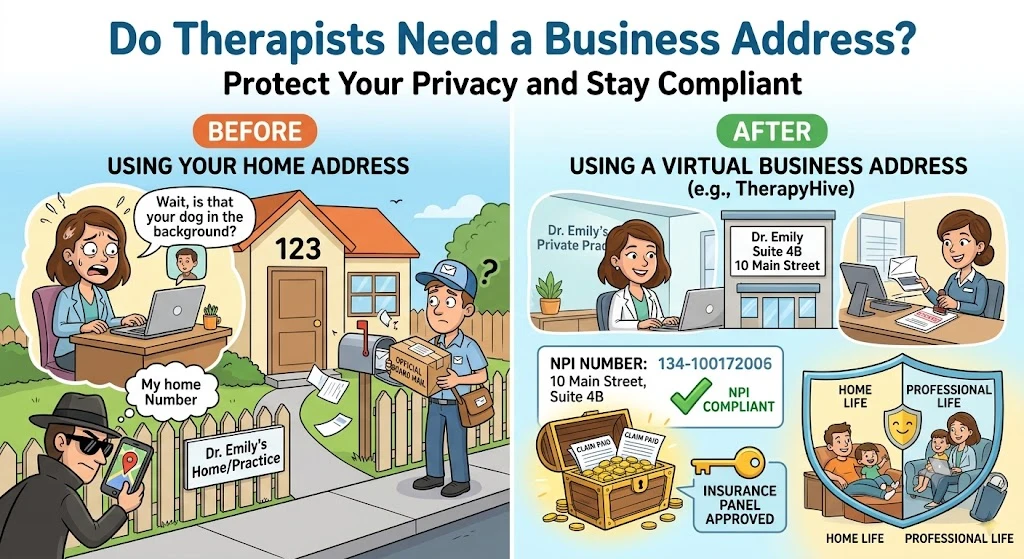
Why Do Therapists Need a Business Address?
Starting a private practice brings exciting freedom, but it also brings quick legal questions. Many mental health care providers ask: do therapists need a business address if they only see clients online?
The short answer is yes. Even if your entire private practice runs through telehealth video calls, state licensing boards, tax agencies, commercial banks, and health insurance providers require a physical location. Using a home street location puts your personal safety at risk because public lookup tools publish these locations online.
A commercial virtual office solves this problem. It satisfies state board requirements, satisfies insurance credentialing rules, and provides secure mail processing. Mental health workers, psychologists, and psychiatrists turn to specialized services like TherapyHive to keep their home life private while maintaining a legal practice footprint.
Why Home Addresses Create Safety and Privacy Risks for Therapists
When starting out, using a home location feels simple and free. However, putting your residential address on official forms creates hidden hazards for mental health care providers.
- Public Exposure: Your address appears on the public NPI Registry and Google Maps.
- Personal Safety: You risk unannounced client visits at your front door.
- Boundary Issues: Family privacy becomes compromised by public online searches.
- Zoning Conflicts: Cities can issue fines for running an unauthorized home business.
Public Record Exposure
When you register for a national provider identifier, your location enters a public federal database. Anyone can search your full name online and instantly find where you live. This public listing allows former clients, angry callers, or online strangers to find your front door.
Boundary Confusion
Mental health care relies on clear boundaries between professional life and personal space. When clients see a home address on bills or receipts, professional boundaries blur. Unexpected drop-ins or unwanted package deliveries at your doorstep disturb your family life.
Zoning and Lease Violation Concerns
Many residential leases and neighborhood association agreements strictly prohibit running a commercial entity from home. Receiving official bank notices, insurance forms, or client payments at home can violate municipal zoning rules or lease agreements.
Using a specialized Virtual Office for Therapists prevents these problems entirely. It replaces your residential location on official forms with a dedicated professional suite.
State Licensing Boards and NPI Address Requirements
State licensing boards require active contact details on file for every licensed mental health worker. These details determine where legal notices, renewal reminders, and official board letters arrive.
National Provider Identifier Rules
Every mental health professional who bills insurance needs a primary location code. Federal rules at the CMS NPI Registry state that provider practice addresses are public record. A standard PO Box is often rejected for primary location filings because federal agencies demand a physical street address.
State Board Verification
State licensing boards require a legitimate location where legal documents can be served. If your state board conducts an audit or sends official compliance papers, they need a real physical address. A commercial address ensures you stay fully compliant with all state laws.
Telehealth Licensing Rules
Even if you offer telehealth services across an entire state, licensing boards want a physical anchor in that jurisdiction. Utilizing a local NYC Virtual Address satisfies board mandates while allowing you to work flexibly from any remote office.
How Insurance Panels and Billing Impact Your Practice Address
Insurance credentialing is one of the biggest reasons private practice owners need a real commercial location. Claims processing systems inspect address details carefully before approving payments.
Credentialing Verification
Health insurance panels check practice addresses against national databases. If your address looks like a standard residential box, credentialing teams may flag or delay your application. Having a recognized commercial office address builds trust with insurance network reps.
Claims Processing and Explanations of Benefits
When claims are submitted, insurance companies send checks, Explanation of Benefits (EOB) statements, and audit notices to your practice address. Losing important billing mail causes severe cash flow delays.
Maintaining Federal Privacy Standards
Patient privacy is protected under federal health regulations. The official guidelines at U.S. HHS HIPAA Rules require strict administrative safeguards for client documents. Receiving physical insurance paperwork at an unsecured home mailbox risks privacy breaches if family members or neighbors access your mail.
Comparing Practice Address Options for Private Practice
Choosing the right address solution depends on your practice model, budget, and physical office needs. The detailed decision breakdown below highlights how common practice location options handle real-world operational challenges.
| Address Choice | Accepts Physical Packages & Official Mail? | Meets CMS & CAQH Credentialing Standards? | Protects Residential Address from Public Searches? | Average Monthly Expense | Best Suited For |
| Home Address | Yes (Arrives at your front door) | Conditional (Exposes home address publicly) | No (Listed openly on NPI and web searches) | $0 | Practice owners with no privacy concerns |
| P.O. Box | Mail only (No carrier package deliveries) | No (Rejected as a primary practice location) | Partial (Linked to local post office branch) | $15 – $30 | Personal correspondence only |
| Commercial Lease | Yes (Requires staff or manual collection) | Yes (Fully compliant physical location) | Yes (Separates home from workplace) | $1,500 – $4,000+ | Full-time in-person clinical practices |
| TherapyHive Virtual Office | Yes (Secure digital mail scanning & handling) | Yes (Valid commercial street address with suite number) | Yes (Complete identity and home protection) | Low Flat Rate | Telehealth, hybrid, & growing private practices |
Standard PO Box Limitations
While a local post office box hides your home street, most insurance payers, banks, and state licensing boards refuse PO Boxes for primary physical location fields. They require a physical building location with a suite number.
Traditional Commercial Leases
Renting a commercial therapy suite offers a physical location, but full-time leases are expensive. Monthly rents, utilities, and long-term contracts create heavy overhead for new or growing practices.
Virtual Office Solutions
A virtual location provides a real street location with suite details at a fraction of commercial rent costs. Medical professionals like doctors use a dedicated Psychiatrist Virtual Office to maintain full regulatory compliance while cutting overhead costs.
Setting Up a Commercial Virtual Address for Mental Health Professionals
Setting up a virtual business location for your private practice is fast, simple, and stress-free. Follow this straightforward setup pathway to secure your practice credentials.
- Step 1: Choose a virtual plan designed for therapy practices.
- Step 2: Complete standard identity verification forms.
- Step 3: Update NPI Registry, state board, and insurance details.
- Step 4: Streamline client communication and secure mail handling.
Choosing the Right Plan
Select a location service tailored specifically to mental health care practitioners. Services built for therapy practices understand HIPAA rules, provider credentialing needs, and professional mail handling requirements.
Verifying Practice Credentials
Fill out basic identity verification forms required by the postal service. This standard process ensures your business mail is legally handled and protected under federal law.
Updating Practice Filings
Once your commercial location is active, update your details across official platforms:
- State licensing board profiles
- National Provider Identifier database
- Commercial insurance panels and CAQH profiles
- Business bank accounts and credit cards
- Practice website and local search listings
Adding comprehensive Virtual Practice Solutions gives you complete control over administrative tasks so you can focus on client care.
Conclusion
Securing a dedicated practice location is essential for every modern mental health practitioner. Protecting your personal residence keeps your family safe, maintains clean professional boundaries, and keeps your private practice fully compliant with state and federal regulations. Switching from a home location to a commercial virtual office gives you total peace of mind without high commercial lease fees.
Frequently Asked Questions
Do online therapists need a physical business address?
Yes, telehealth therapists need a physical street address for state board licensing, NPI registration, tax filings, and insurance credentialing. PO Boxes are generally rejected for primary practice locations by federal and state registration systems.
Can I use a PO Box for my NPI number?
No, federal guidelines require a physical street location for your primary NPI listing. You can use a PO Box for your mailing location, but your physical primary practice location remains visible on public search engines.
Will my practice address appear on public websites?
Yes, primary business addresses submitted to state licensing boards and the NPI registry become public records. Anyone searching your name online can see this location unless you use a secure commercial virtual office suite address.
Is a virtual business address legal for therapy practices?
Yes, using a virtual business address is completely legal for mental health practices. It provides a legitimate physical street location with a suite number that satisfies state licensing rules, banking requirements, and insurance panels.
How does mail handling work with a virtual office?
Your business mail arrives at a secure commercial facility. Professional staff receive your mail, scan the envelopes securely, and notify you online so you can view, forward, or shred documents according to your preferences.
Will insurance companies accept a virtual practice address?
Yes, insurance companies accept virtual office locations as long as they feature a valid physical street location and suite number. Virtual addresses meet standard credentialing criteria far better than standard postal boxes.
Does a virtual address protect my personal safety?
Yes, utilizing a virtual address keeps your home street location off public databases, search engines, and client receipts. Former clients or online searchers see only your professional commercial location, protecting your personal home space.
Can I receive confidential client documents at a virtual address?
Yes, reputable virtual office services follow strict security protocols when handling mail. Official mail is stored in secure facilities and processed carefully to ensure your professional documents remain completely private and protected.
How fast can I set up a virtual business address?
Setting up a virtual practice location usually takes less than twenty-four hours. After completing simple identity verification forms, you can immediately start using your new commercial address on official practice registration documents.
Can therapists use a virtual business address for Google Business Profile?
A virtual mailing address alone does not qualify for a Google Business Profile. Google generally requires businesses to serve customers in person at an eligible physical location. Therapists using shared office space must meet Google’s signage, staffing, and customer contact requirements before listing that address as their practice location.
Does HIPAA require therapists to have a separate business address?
HIPAA does not generally require therapists to rent a separate commercial business address. It requires covered providers to protect patients’ health information. Therapists working from home must use appropriate privacy safeguards. If a virtual office provider handles protected health information on their behalf, a Business Associate Agreement may be required.
Can therapists use different mailing and practice addresses?
Therapists may be able to use separate mailing and physical practice addresses, depending on the specific form, payer, or licensing authority. A mailing address receives professional correspondence, while a practice location identifies where services are provided. Therapists should verify the requirements before submitting an address for insurance credentialing, NPI records, or professional licensing.
Key Takeaways
- Safety First: Using a personal residence for practice filings exposes your home location to public databases and client searches.
- Compliance Ready: State licensing boards, NPI databases, and insurance networks require a physical street address rather than a simple PO Box.
- Cost-Effective: A virtual office provides a prestigious commercial location without the expensive monthly overhead of a physical suite lease.
- Streamlined Mail: Professional mail processing delivers digital copies of important documents securely without risking family privacy.
Take the Next Step Toward Practice Privacy
Ready to safeguard your home privacy and elevate your professional image? Protect your private practice with TherapyHive today. Discover our flexible virtual address plans designed specifically for mental health professionals and secure your commercial location in minutes!