

TL;DR
Starting a private therapy practice in NYC involves checking your professional license, choosing a legal business structure, arranging insurance, and finding a suitable office or virtual practice setup. This guide explains the key steps, startup expenses, and registration requirements for therapists preparing to open an independent practice in New York City.
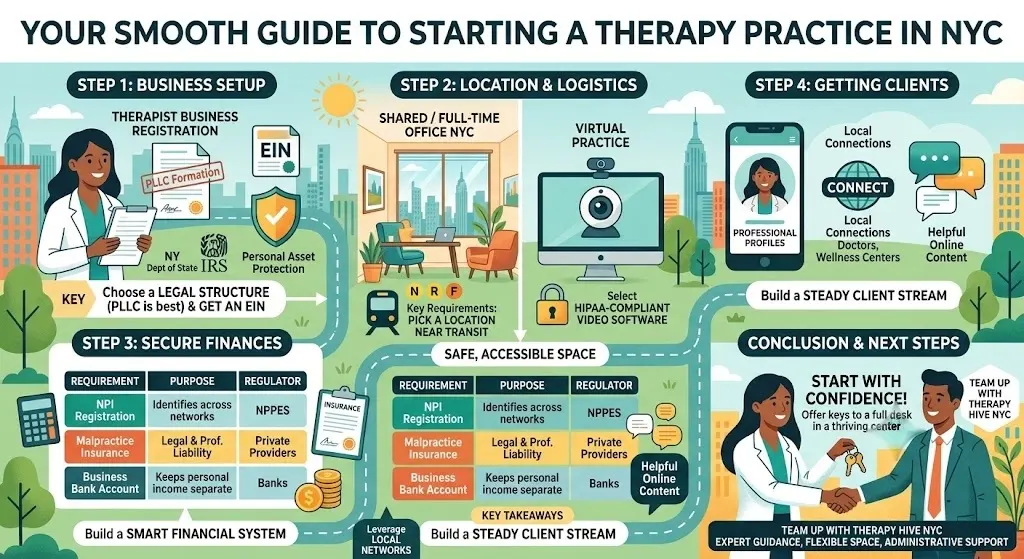
Step Into Freedom: How to Start a Therapy Practice in NYC
Many therapists in New York City want to start a private practice but face questions about licensing, business registration, office costs, and insurance billing. Understanding how to start a therapy practice in NYC helps you plan each step before accepting clients. Whether you choose in person sessions, teletherapy, or a hybrid model, you need a business setup that meets New York State requirements.
When you set up a private practice, you step away from heavy corporate caseloads. Instead, you gain total control over your working hours, fee structure, and office culture. The process requires a clear step-by-step plan, but the independence you gain makes every administrative task worth the effort.
Understanding Your NYC Business Setup
Before opening a therapy private practice in New York, confirm that your professional license allows you to provide the services you plan to offer independently. Next, choose an appropriate business structure. Depending on your profession and circumstances, you may practice as a sole proprietor or establish an authorized professional entity, such as a Professional Limited Liability Company (PLLC) or Professional Corporation (PC).
New York has specific rules for professional entities that provide clinical services. A PLLC may offer certain liability protections, but it does not remove personal responsibility for professional misconduct. Consult a qualified attorney or accountant before selecting your business structure.
Next, complete your therapist business registration with the New York Department of State. You must also apply for an Employer Identification Number (EIN) from the IRS for banking and tax filing. These steps protect your assets and build a solid foundation for long-term growth.
| Setup Requirement | Purpose for Practice | Main Regulatory Body |
| PLLC Formation | Protects personal liability for clinicians | NY Department of State |
| NPI Registration | Identifies you across healthcare networks | National Plan & Provider Enumeration System |
| Malpractice Insurance | Covers legal expenses and professional liability | Private Insurance Providers |
| Tax ID (EIN) | Allows business bank accounts and tax filings | Internal Revenue Service |
Key Requirements to Open a Therapy Office in NYC
Finding the right physical or virtual space is a key step when you decide to open a therapy office in NYC. Real estate in Manhattan, Brooklyn, and Queens comes with high monthly rent. Because of this, many clinicians start with teletherapy or share an office space before signing a long-term lease agreement.
To help you move forward smoothly, use this simple checklist:
- Obtain your local business permits and stay clear of city zoning issues.
- Select HIPAA-compliant video software if you offer remote sessions.
- Create a simple, safe intake process using a secure digital system.
- Pick a peaceful physical location near public subways or buses.
Research published by the National Institutes of Health shows that hybrid healthcare models build strong client engagement while keeping overhead costs manageable. By keeping your static costs low at the start, you give your practice time to stabilize financially.
Smart Financial Systems for Your Practice Startup
A common challenge during a therapist startup guide NYC launch is handling money and insurance networks. You must decide whether to accept health insurance or run a private pay practice. Taking insurance brings a steady stream of local referrals, but it requires careful claim tracking. On the other hand, private pay simplifies your daily work, though it requires stronger marketing.
You should open a separate business bank account to keep your personal income separate from practice expenses. Set aside funds for taxes, state fees, software tools, and emergency costs. Keeping clean financial records keeps your practice organized and helps avoid stress during tax season.
Navigating Malpractice Coverage and Administrative Rules
Operating an independent clinical practice means managing commercial risks and keeping up with state compliance rules. Standard commercial leases or unexpected property issues require clear operational boundaries. Getting proper professional liability coverage protects your clinical work from unexpected legal claims. Additionally, maintaining separate corporate accounts prevents personal funds from mixing with practice revenues during routine filings.
Staying organized with administrative tasks ensures your practice operates without costly interruptions. Federal guidelines hosted on the U.S. Department of Health & Human Services portal detail administrative safeguards required for handling confidential records. Following these standards builds credibility with clients while protecting your private business operations.
Building a Consistent Stream of Clients
Once your paperwork and office setup are complete, focus on helping local clients find your care. Having a clear online presence makes it simple for prospective clients to book consultations. You can highlight your specific clinical focus, your background, and your overall approach to mental health care.
- Set up professional profiles on trusted mental health directories.
- Connect with local medical doctors, wellness centers, and fellow counselors.
- Create helpful online content that directly answers common client questions.
- Focus on a clear niche so clients easily know how you can help them.
Building strong working relationships with other local providers creates a steady stream of client referrals. When you share your clinical values clearly, you attract individuals who fit your practice best.
Launching Your Private Practice With Confidence
Taking your first steps toward an independent clinical career can feel like a huge task. When you organize your licensing steps, choose smart office solutions, and streamline your finances, you set up a practice that lasts. You gain the space to work on your own terms while providing high-quality care to people across New York City.
If you want expert guidance, affordable clinical spaces, and administrative assistance, team up with Therapy Hive NYC. Our tailored clinical environment supports independent therapists at every step of their growth journey.
FAQs About NYC Practice Setup
What business entity should I choose for an NYC practice?
Most clinicians set up a Professional Limited Liability Company (PLLC). It protects personal assets while satisfying New York State regulations for licensed health professionals.
Do I need a physical office to practice in NYC?
No, you can launch a fully virtual practice using HIPAA-compliant software. Many therapists use shared office suites to offer flexible hybrid care options for clients.
How much does it cost to start a therapy practice?
Initial setup costs range between two thousand and five thousand dollars. Expenses cover filing fees, insurance, software, office supplies, and initial marketing materials.
How do I get an NPI number in New York?
You apply online through the National Plan and Provider Enumeration System. The registration process is free and takes only a few minutes to complete.
Should I take health insurance or stay cash-only?
Insurance builds a reliable client referral base quickly, while cash-only reduces paperwork. Select the model that best fits your immediate financial needs and long-term goals.
How do I register my practice with New York State?
File your articles of organization with the New York Department of State. Be sure to obtain the required approval from the Office of the Professions.
What insurance policies do I need before opening?
You need professional liability insurance and general business insurance. These cover legal claims, property damage, and unexpected workplace incidents.
How long does the setup process usually take?
Filing documents, setting up software, and opening bank accounts take two to three months. Planning early keeps your transition smooth and stress-free.
Can I share an office space with other therapists?
Yes, renting space in shared clinical suites is very common across New York. It lowers overhead expenses and creates opportunities for professional peer support.
Can an LMSW Start a Private Therapy Practice in New York?
A Licensed Master Social Worker (LMSW) cannot independently establish a private practice to provide clinical social work services in New York. Clinical services require an authorized setting and appropriate supervision. Therapists should review the rules for their exact license before offering independent psychotherapy services.
Should I Rent Hourly or Full Time Therapy Office Space in NYC?
Hourly therapy office rentals can suit clinicians with a smaller number of in person appointments or changing schedules. Full time offices may work better for established practices that need regular access to the same space. Compare appointment volume, total monthly costs, privacy, and client convenience before choosing.
Key Takeaways
- Form a PLLC to satisfy state rules and protect your personal financial assets.
- Use hybrid or shared spaces to manage initial monthly overhead costs.
- Select between insurance and private pay based on your long-term income goals.
- Build local professional connections to establish a reliable referral network.
Take the Next Step Toward Your Own Practice
You do not have to navigate building your business alone. Connect with Therapy Hive NYC today to discover flexible workspace solutions and supportive resources designed specifically for mental health professionals across the city.